

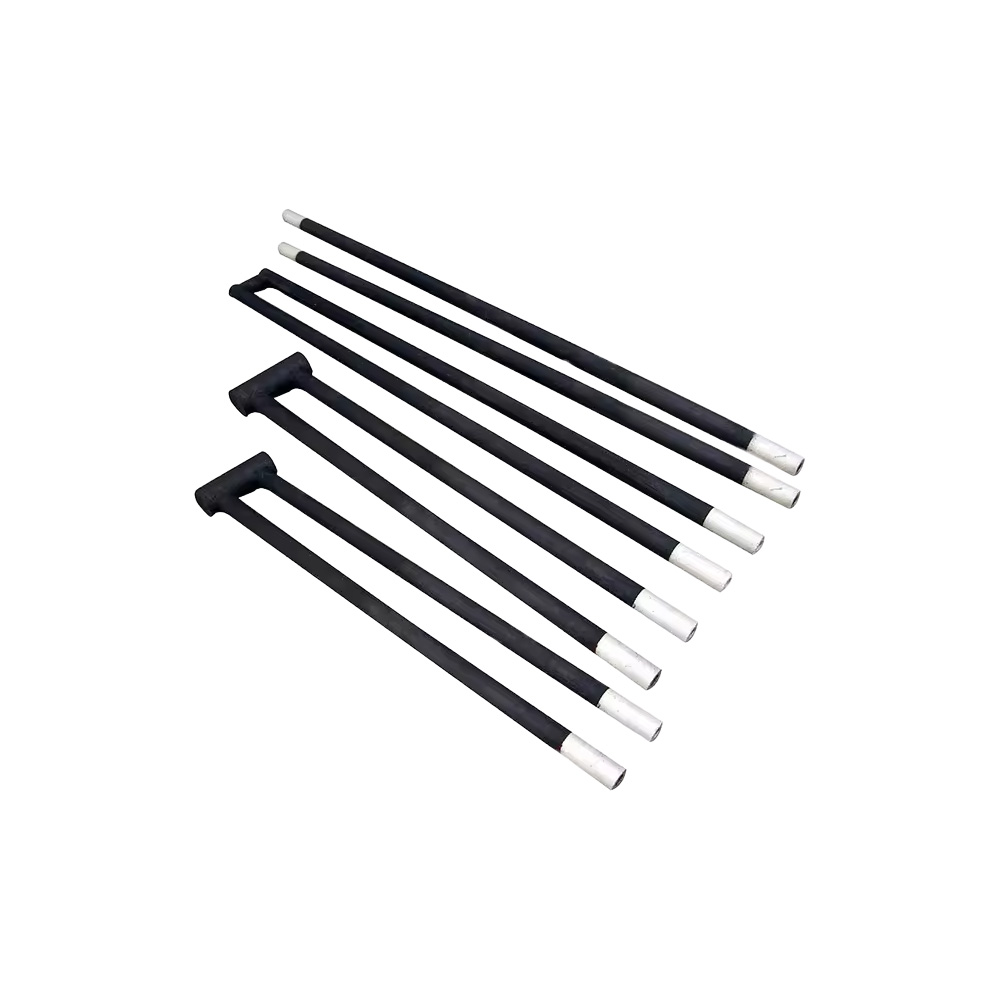

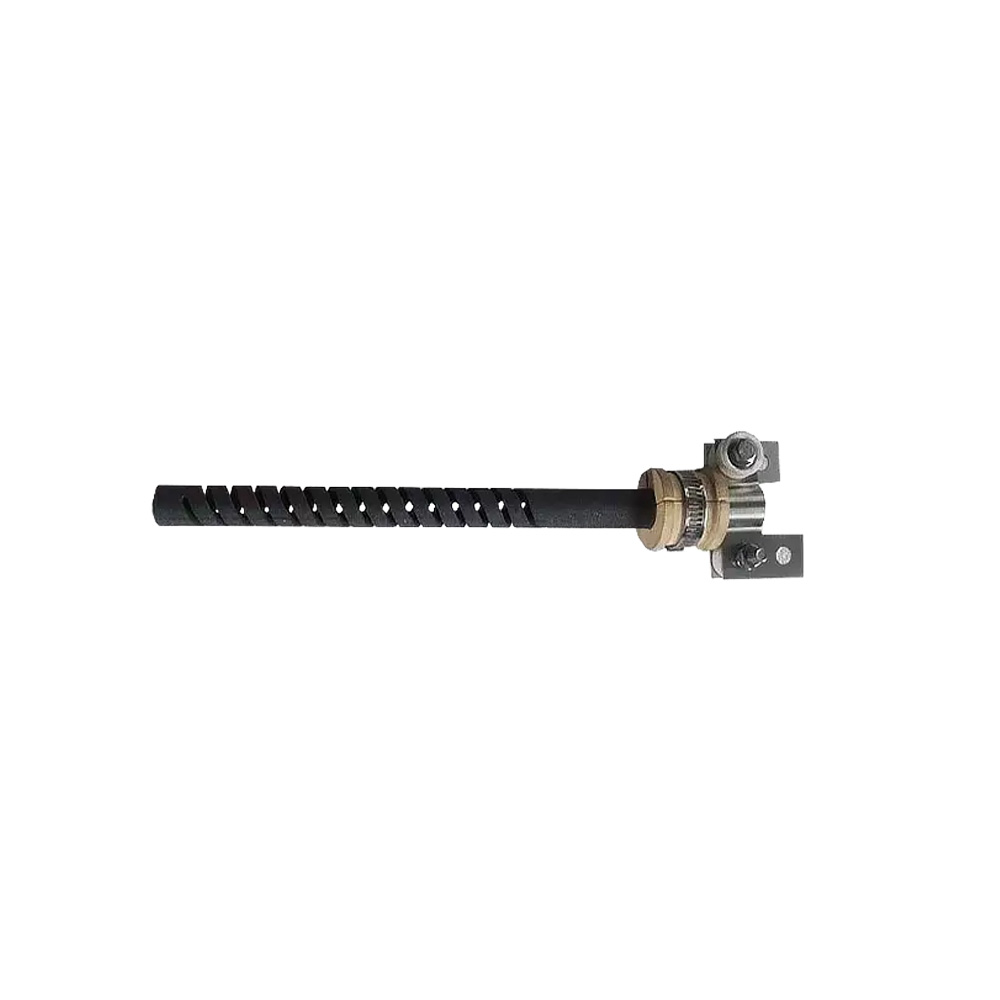
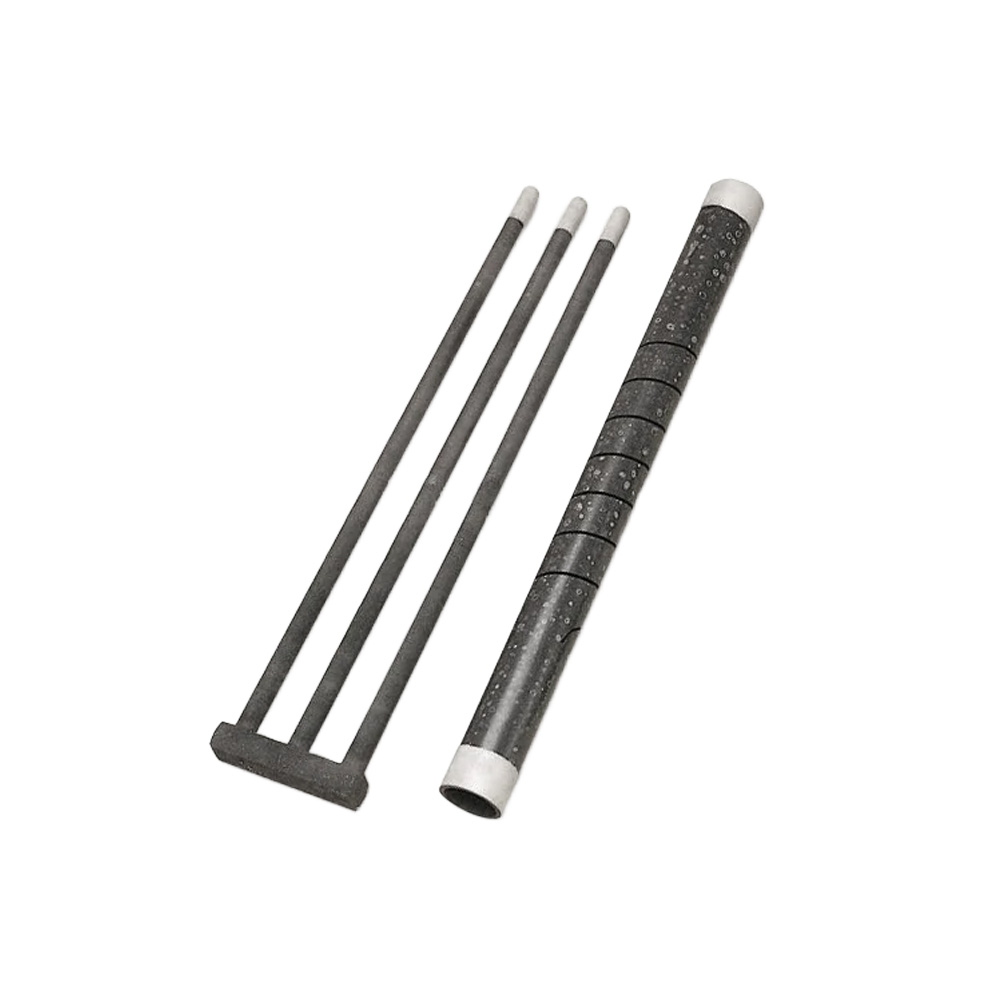
Silicon Carbide Heating Elements represent the pinnacle of high-temperature ceramic heating technology, manufactured from ultra-high purity recrystallized α-SiC (alpha silicon carbide) utilizing advanced powder metallurgy and high-temperature sintering processes. These sophisticated non-metallic heating elements are specifically engineered for demanding industrial and laboratory furnace applications requiring reliable operation at extreme temperatures up to 1600°C in diverse atmospheric conditions including oxidizing, reducing, and inert environments.
The advanced recrystallized microstructure provides exceptional thermal shock resistance, superior mechanical strength, and remarkable chemical stability enabling extended service life even in the most aggressive industrial environments. The optimized grain structure and high-density ceramic matrix ensure consistent electrical resistance characteristics, uniform heat distribution, and predictable performance throughout the operational temperature range.
| Parameter | Value / Range |
| Maximum Operating Temperature | 1600°C (2912°F) continuous operation |
| Element Materials | Ultra-high purity recrystallized α-SiC (alpha silicon carbide) |
| Element Configurations | DH, DL, U, CU, M, W, SG, SGR, UX, DB, Custom shapes |
| Rod Diameter Range | 8–54 mm standard (up to 75 mm for specialized spirals) |
| Maximum Standard Length | 4300 mm straight (1000 mm for SG/SGR configurations) |
| Power Density Range | 15 to 50 W/cm² (application and cooling dependent) |
| Resistance Tolerance | ±10-15% (superior consistency vs. standard SiC) |
| Atmosphere Compatibility | Oxidizing, reducing, inert gas, vacuum, controlled atmosphere |
| Thermal Shock Resistance | Exceptional resistance to rapid temperature changes |
| Chemical Compatibility | Superior resistance to acids, alkalis, and aggressive chemicals |
| Connection Types | Aluminum braid, clamp-on, spring-loaded, ceramic terminals |
| Manufacturing Process | Advanced powder metallurgy with high-temperature sintering |
| Quality Standards | International specifications with comprehensive testing protocols |